Gold drops by a third from record peak: What happens next?
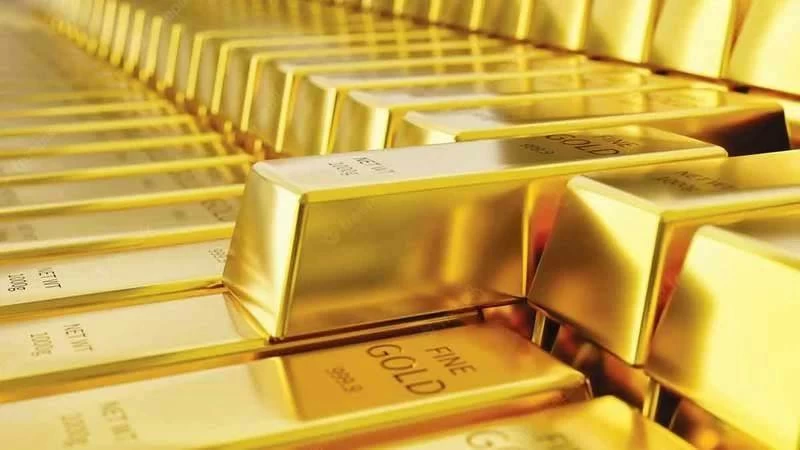
Dubai: Gold is facing one of its toughest periods this year, having lost a large part of the historic gains made at the beginning of 2026. The sharp turnaround has raised questions among investors about the future of the yellow metal and whether the current decline represents a temporary correction or the beginning of a new phase of losses.
Gold hit a record high of $5,589.38 an ounce on January 28, 2026, before entering a sharp downward spiral that pushed it below $3,576.09 during trading on Friday, a decline of about a third from its historic peak.
The losses come amid a combination of economic and financial pressures, most notably rising US Treasury bond yields, a stronger dollar and shifting expectations for Federal Reserve monetary policy. These factors have reduced the appeal of gold as an asset that does not generate regular income.
Higher interest rates reshape the investment landscapeAnalysts believe the change in gold's direction is mainly linked to a shift in the investment environment that had previously supported its rise.
The yellow metal benefited from a weak dollar, low interest rates and expectations of further monetary easing, as well as concerns about global debt and geopolitical tensions. These factors prompted investors to increase their gold holdings as a safe haven and hedging tool, according to CNBC.
But the landscape changed as expectations grew that the Federal Reserve would move towards tighter monetary policy, while US bond yields rose, making gold less attractive compared with assets that provide direct returns.
Evan Mills, a financial adviser at Scholar Financial Advising, said rising Treasury bond yields and a strong dollar had increased the opportunity cost of holding a non-income-generating asset. He said money market funds now offer returns of between 4% and 5%, making cash a more attractive option for some investors.
He added that stocks, bonds and traditional investment instruments had become more attractive as the balance between risk and return changed.
Gold shifts from safe haven to source of liquidityShifts in investor sentiment following the outbreak of conflict in the Middle East also contributed to accelerating gold's decline.
Suki Cooper, global head of commodities research at Standard Chartered Bank, said that during the period of turmoil, gold shifted from being a safe haven within investment portfolios to a quick source of liquidity because of the ease with which it can be traded and sold.
She said some investors liquidated their gold holdings to raise cash, contributing to the price correction.
Cooper added that gold can behave as either a commodity or a currency, depending on the factors driving markets and investor behaviour. Factors linked to the dollar and liquidity are currently having a greater influence on price movements, she said.
Central banks continue buying despite price declineDespite the pressure on gold, central bank purchases remain one of the most prominent sources of long-term support.
According to the World Gold Council, central bank purchases reached their highest monthly total in September, although total purchases were down 7% compared with the same period last year.
Gold-backed exchange-traded funds also recorded inflows of about $89 billion last year, taking their total assets to $559 billion. Their holdings increased by about 800 tonnes during the same period.
The figures reflect continued interest in gold among investment institutions and long-term investors despite sharp price fluctuations.
Gold could fall towards $3,500 an ounceSome analysts do not rule out further pressure on gold in the coming period.
Mark Chandler, managing partner and chief market strategist at Bannockburn Capital Markets, said prices could move into a range of $3,500 to $3,600 an ounce.
He warned against prematurely treating current levels as the market's final bottom, saying charts do not yet provide clear indications that the downward trend has ended.
Chandler also said gold remained high compared with its long-term historical averages, with its 10-year moving average at about $2,127 an ounce and its 20-year average at $1,666.
Will gold regain its lustre in 2027?Despite the current pressure, some experts remain optimistic about gold's longer-term prospects, arguing that the fundamental factors that supported its upward trend have not disappeared.
Philip Dale, former director of the US Mint and current president of the US Money Reserve, said the fundamentals that supported the gold bull market remained in place, arguing that geopolitical developments and the war in the Middle East had created an exceptional shock in markets.
Dale predicted that gold would return to an upward trajectory in 2027, with the possibility of lower oil prices and stable interest rates providing a more supportive environment for the precious metal.
Amy Gower, head of metals and mining strategy at Morgan Stanley, also believes there are several reasons to continue holding gold despite this year's price correction.
Gold as insurance, not speculationEvan Mills said one mistake some investors make is treating gold as a tool for rapid capital growth rather than as a means of hedging and diversifying risk.
He described gold as "portfolio insurance and not an engine of growth", warning against buying the metal at excessively high prices simply to chase an upward trend.
Mills said investors who buy gold as a long-term hedge may not need to change their strategy solely because of a price decline, provided their primary objective is to protect their portfolio from risk and volatility.
With pressure from the dollar and interest rates on one side, and continued institutional demand and geopolitical concerns on the other, gold's outlook remains dependent on how markets reassess its investment appeal.
While prices could fall further towards $3,500 an ounce, optimists are betting on a return to an upward trend in 2027, leaving the battle between gold bulls and bears open.
Originally published at emirates247.com.